

Brushing your teeth with baking soda might sound like a simple and natural solution for a brighter smile, but is it really as effective as it seems? Many people turn to this common household item hoping for a quick fix to whiten their teeth and freshen their breath. However, while baking soda can offer some benefits, it’s important to weigh these against potential drawbacks.
In this guide, we’ll explore what brushing with baking soda entails, discuss its pros and cons, and provide tips on how to use it safely. Read on.
Is Brushing Your Teeth With Baking Soda Safe?
Researchers have investigated whether baking soda in dental toothpaste can be safe. The following conclusions have been drawn about its safety as a dental cleanser:
- Low abrasiveness
- Does not affect root sensitivity
- The product is safe for those who are following reduced salt diets
Researchers also evaluated baking soda’s abrasiveness within commercial toothpastes and concluded that baking soda-based toothpastes are safe and have low abrasiveness.
What Is Baking Soda and How Does It Affect Your Teeth?
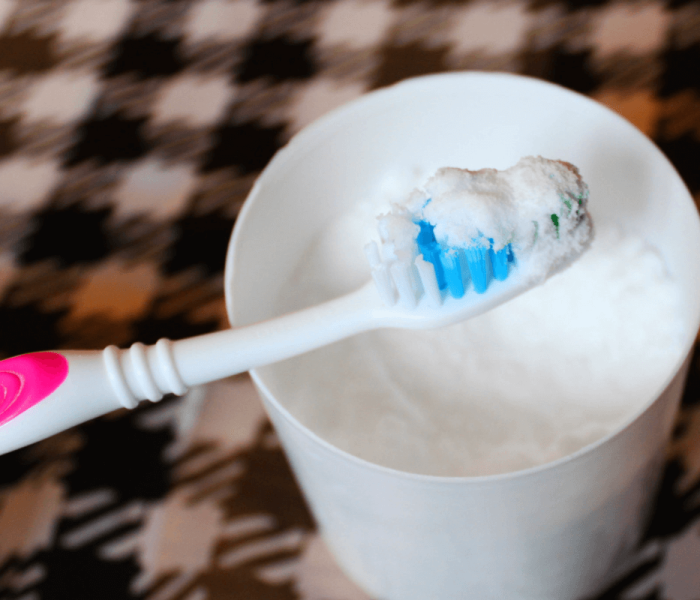
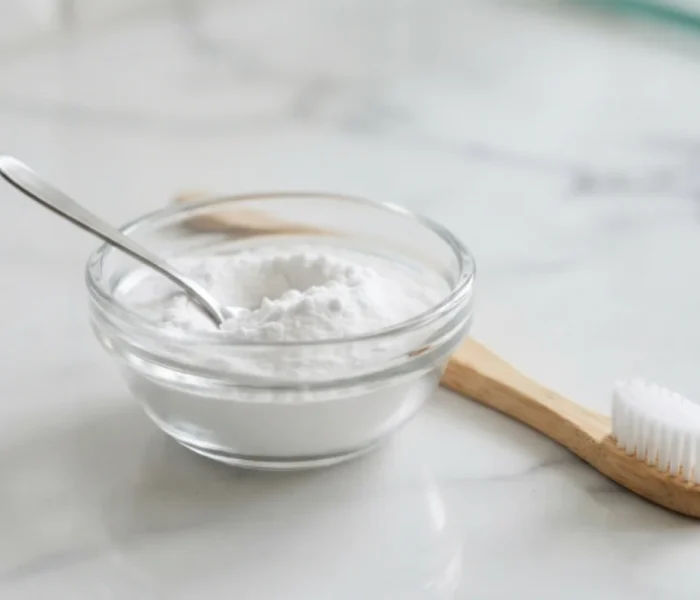
Baking soda, also known as sodium bicarbonate, is a mild abrasive that can help clean teeth by removing plaque and surface stains. It also neutralizes acids in the mouth, which may help protect enamel from acid-related damage. However, baking soda does not contain fluoride, so it does not provide the same cavity protection as fluoride toothpaste.
How baking soda affects your teeth:
- Removes surface stains: Helps lift stains caused by foods, drinks and tobacco.
- Cleans plaque: Its mild abrasiveness can help remove plaque from tooth surfaces.
- Neutralizes acids: Helps reduce acidity in the mouth that can contribute to enamel erosion.
- Does not prevent cavities on its own: Plain baking soda contains no fluoride, which is why it should not replace fluoride toothpaste for daily brushing.
Can You Brush Your Teeth Using Baking Soda Daily?
The American Dental Association declares that baking soda can be used to clean teeth. Simply brushing with baking soda can be beneficial if you are allergic to any ingredient found in traditional toothpaste. It is also possible to use baking soda as an option for traveling or hiking for those who want to lighten their burden and decrease the carbon footprint of their trip.
It is important to remember that when using baking soda to whiten your teeth, your chompers might not appear whiter right away after use. You may need to use baking soda several times to remove stains such as tobacco or coffee. However, over time, you’ll be able to see the outcome!
Is Baking Soda Good for Whitening Teeth?
Baking soda can make teeth look cleaner and brighter by helping remove surface stains from coffee, tea, tobacco and other foods. It does not work like a bleaching treatment, so it cannot reliably change the natural colour of your teeth or remove deeper stains. Research has found that baking soda-based toothpastes can be effective at reducing tooth stains and improving whiteness.
What baking soda can do:
- Remove surface stains: Helps clean stains that build up on the outer surface of teeth.
- Make teeth look brighter: Removing surface discolouration can improve the appearance of your smile.
- Help clean plaque: Baking soda-containing toothpastes have also shown benefits for plaque control.
- Not a true bleaching treatment: It cannot provide the same whitening effect as peroxide-based whitening products.
For everyday brushing, a fluoride toothpaste that contains baking soda is a better choice than using plain baking soda because it provides both cleaning and cavity protection.

The Benefits of Brushing With Baking Soda
- Dental Whitening: One of the most attractive aspects of baking soda is its potential to help whiten teeth. By gently polishing away surface stains, baking soda helps make your smile look brighter and more appealing.
- Neutralizing Oral Acids: The alkaline properties of baking soda can help neutralize the mouth’s acid levels, reducing the chance of tooth decay and boosting oral health. After consuming acidic food or drinks, brushing your teeth with baking soda will help balance the pH in your mouth.
- Helps Prevent Gum Disease: By reducing plaque and combating inflammation caused by baking soda, it may help guard against gum disease. Periodontitis (gum disease) is the leading cause of tooth loss, triggered by inflammation. If you suffer from swelling, red, or bleeding gums caused by gingivitis, then brushing with baking soda may help repair the damage.
- Refreshes Your Breath: Baking soda neutralizes the acids released by food particles, which can help reduce bad breath caused by bacteria.
- Fluoride-Free Option: Consuming too much fluoride can be harmful, particularly for children younger than six years old. But it’s crucial to remember that fluoride poisoning is extremely rare, and the dangers only arise if a large quantity of fluoride is consumed.
- Fluoride toxicity: It can trigger diarrhea, vomiting, and pain, as well as kidney and heart issues. This is why many people opt for toothpaste like baking soda, which is free of fluoride and has a lower risk of toxicity.
- Cost-Effective: Baking soda is cheaper than commercial toothpaste, making it economical for maintaining oral hygiene.
Baking Soda vs. Regular Toothpaste: What’s the Difference?
Baking soda can help clean teeth, remove surface stains and reduce plaque, but plain baking soda is not a complete substitute for toothpaste. Fluoride toothpaste provides an important benefit that baking soda alone does not: fluoride helps strengthen enamel and protect against tooth decay.
Key differences:
- Baking soda: Helps remove plaque and surface stains and neutralize acids.
- Fluoride toothpaste: Cleans teeth while also helping prevent cavities and strengthen enamel.
- Baking soda toothpaste: Combines the cleaning benefits of sodium bicarbonate with fluoride protection.
- Best for daily brushing: A fluoride toothpaste is recommended rather than brushing with plain baking soda.
The Disadvantages of Brushing With Baking Soda
There are many positives to using baking soda for dental hygiene, but certain disadvantages exist:
- Gritty and Tastes Unappealing: Baking soda tastes unpleasant and can feel like sand on your teeth. If you’re uncomfortable with baking soda in its pure form mixed with water, many toothpastes sold in the market contain baking soda.
- Doesn’t Protect Against Cavities: Another disadvantage of baking soda for cleaning teeth is that it does not contain the required fluoride to shield teeth from decay. In a review of research, scientists discovered that fluoride toothpaste has a dose-dependent influence on preventing cavities.
- The higher the fluoride concentration, the better protected individuals are from cavities. The American Dental Association (ADA) does not endorse baking soda alone due to the lack of fluoride.
- Less Dramatic Whitening: While baking soda can be an effective and low-cost whitening agent for superficial stains, it’s less effective than commercially available products or professional services. This is because commercially available products and professional services use stronger ingredients, such as bleaching agents, to treat deeper staining.
Does Brushing With Baking Soda Harm the Teeth?
Baking soda is an effective cleanser that functions like fine sandpaper. If you apply it to your teeth, it can efficiently clean away dirt and stains like using sandpaper to remove old paint or stains. But, like sanding too hard or repeatedly wearing down wood and removing the varnish that protects it, using baking soda frequently or with too much force could wear away the enamel that covers your teeth. The enamel acts as the surface of your teeth and, once damaged, won’t regenerate.
A loss in enamel could result in increased sensitivity to heat and greater susceptibility to tooth decay because the soft, underlying dentin is more prone to decay and temperature sensitivity. If sanded too hard, a wood floor will require complete refinishing or replacement. Teeth require crowns, fillings, or other procedures if the enamel is worn out to the extent that it needs to be replaced.
Thus, while baking soda can be part of an oral hygiene routine, it should be used cautiously and sparingly, much as you would rub sandpaper on a treasured piece of wood furniture to ensure it is not damaged. This approach helps maintain the well-being and longevity of your teeth and their protective enamel.
Can Baking Soda Damage Tooth Enamel?
Baking soda is considered a low-abrasive ingredient, and research suggests that baking soda-based toothpastes can be used safely without causing significant enamel wear when used properly.
The bigger concern is how you brush, rather than baking soda itself. Brushing too hard or using an abrasive product excessively can contribute to tooth wear over time.
To protect your enamel:
- Use a soft-bristled toothbrush.
- Brush gently instead of scrubbing your teeth.
- Avoid using plain baking soda excessively.
- Choose a fluoride toothpaste for regular brushing.
- If you already have enamel wear or sensitive teeth, ask your dentist before using baking soda regularly.

Can You Use Baking Soda for Bad Breath?
Baking soda may help reduce bad breath by helping control some of the compounds that cause mouth odour. Research has found that toothpastes containing sodium bicarbonate can reduce volatile sulphur compounds (VSCs), which are linked to bad breath. It may also help remove plaque and keep the mouth less acidic.
However, baking soda does not treat the underlying cause of persistent bad breath, so regular brushing, tongue cleaning and flossing are still important. If bad breath continues, a dentist can check for problems such as gum disease, tooth decay or other oral health concerns.
How Do You Safely Use Baking Soda?
Baking soda should be employed appropriately to safeguard enamel from damage. It should not be used frequently, as it can damage enamel over time. It is recommended to use it no more than twice per week and for no more than 2 minutes each time.
- The Toothpaste and Baking Soda: This is the easiest method. Sprinkle baking soda over your toothpaste and toothbrush, and brush your teeth normally.
- Baking Soda Mixed With Water: The most common method for whitening teeth is baking soda with water. Mix a few drops of water and 1/2 teaspoon sodium bicarbonate in a glass to create an emulsion. Apply the paste to your teeth with a brush, and let it sit for 2 to 3 minutes. Rinse your mouth thoroughly with water.
- Baking Soda and Lemon: Citric acid is an all-natural bleach. To whiten your teeth, make a paste using 1/2 teaspoon baking soda and 1/2 teaspoon lemon juice. The baking soda and lemon mixture can also make teeth shine.
- Baking Soda and Hydrogen Peroxide: To lighten your teeth, brush with baking soda and hydrogen peroxide toothpaste. To create a mixture, mix 1/2 teaspoon baking soda with 1/2 teaspoon hydrogen peroxide until it forms an almost liquid paste. Apply this paste to your teeth for 2 minutes. After that, rinse with mouthwash or water.
How Often Should You Brush With Baking Soda?
There is no standard dental recommendation to brush with plain baking soda on a regular schedule. Baking soda can help remove plaque and surface stains, but it does not provide the cavity protection of fluoride. The Canadian Dental Association recommends brushing twice a day with a soft-bristled toothbrush and fluoride toothpaste. If you prefer baking soda, choosing a fluoride toothpaste that contains baking soda is a better option for everyday brushing.
For safe use:
- Use a fluoride toothpaste for your regular brushing.
- Avoid aggressive scrubbing or excessive use of plain baking soda.
- Choose a soft-bristled toothbrush and brush gently.
- Speak with your dentist before using baking soda regularly if you have sensitive teeth or signs of enamel wear.
Should You Use Baking Soda Instead of Toothpaste?
Baking soda can help remove plaque and surface stains, but plain baking soda should not replace fluoride toothpaste for everyday brushing. Studies show that baking soda toothpastes can support plaque control and gum health, but the benefits come from a properly formulated toothpaste rather than baking soda alone.
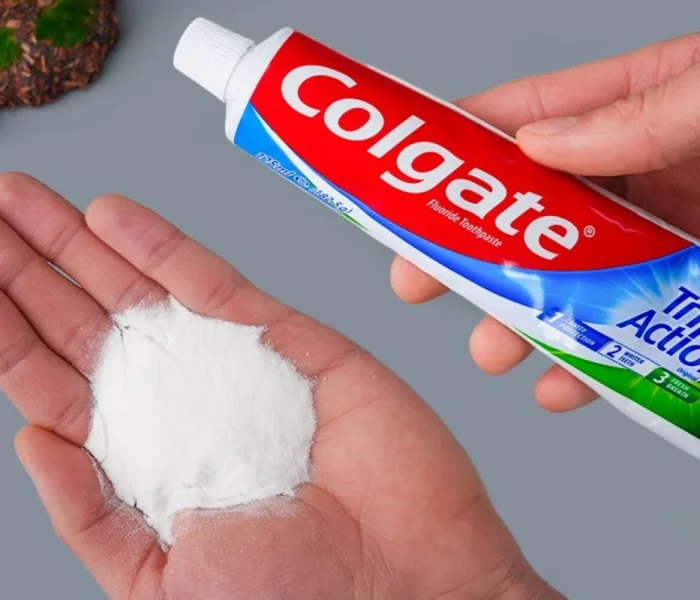
For daily oral care, choose a fluoride toothpaste that contains baking soda if you want its cleaning benefits. This gives you the advantages of baking soda while still providing fluoride to help protect against tooth decay.
Should You Use Baking Soda Instead of Toothpaste?
Baking soda can help remove plaque and surface stains, but plain baking soda should not replace fluoride toothpaste for everyday brushing. Studies show that baking soda toothpastes can support plaque control and gum health, but the benefits come from a properly formulated toothpaste rather than baking soda alone.
For daily oral care, choose a fluoride toothpaste that contains baking soda if you want its cleaning benefits. This gives you the advantages of baking soda while still providing fluoride to help protect against tooth decay.
Who Should Avoid Brushing With Baking Soda?
Brushing with plain baking soda may not be the right choice for everyone. People with tooth sensitivity, existing enamel wear, exposed dentin or gum recession should speak with a dentist before using it regularly. Although baking soda itself has relatively low abrasivity, brushing too hard or using abrasive products incorrectly can contribute to tooth wear.
It is also not recommended to replace fluoride toothpaste with plain baking soda for daily oral care. Fluoride helps strengthen enamel and protect against tooth decay, while baking soda mainly provides cleaning and stain-removing benefits.
You should be cautious with baking soda if you:
- Have sensitive teeth or exposed dentin.
- Have noticeable enamel wear or gum recession.
- Tend to brush aggressively.
- Want to use baking soda instead of fluoride toothpaste.
- Are unsure which oral care products are suitable for your teeth.
For everyday brushing, the Canadian Dental Association recommends a soft-bristled toothbrush and fluoride toothpaste twice a day.
What Do Dentists Recommend About Brushing With Baking Soda?
Dentists generally recommend using a fluoride toothpaste for daily brushing rather than replacing toothpaste with plain baking soda. Baking soda can help remove plaque and surface stains, and research shows that toothpastes containing sodium bicarbonate can improve plaque control and gum health.
If you want the benefits of baking soda, a fluoride toothpaste that contains baking soda is a more practical choice. Brush gently twice a day with a soft-bristled toothbrush and avoid using plain baking soda as your only toothpaste, since it does not provide fluoride for cavity protection.
Summary:
Baking soda can be useful for removing surface stains, cleaning plaque and reducing acidity in the mouth. However, plain baking soda is not a replacement for fluoride toothpaste, because it does not provide fluoride’s cavity-protection benefits. Research supports the use of toothpastes containing both baking soda and fluoride for routine oral care.
For everyday brushing, the Canadian Dental Association recommends brushing twice a day with a soft-bristled toothbrush and fluoride toothpaste. If you want the cleaning benefits of baking soda, choosing a fluoride toothpaste that contains baking soda is a better option than using baking soda on its own.
Baking soda may help brighten teeth by removing surface stains, but it does not provide the same whitening effect as professional or peroxide-based whitening treatments. If you have sensitive teeth, enamel wear or ongoing dental concerns, speak with your dentist before using baking soda regularly.