Veneers and Dental Bonding in London, Ontario

You have probably practised the closed-mouth smile. The one you do in photos so the chipped front tooth, or the gap, or the tooth that has gone grey since a childhood injury does not show. Most people who come to us about veneers have been doing that for years before they finally book.
Here is the honest version of what we do about it.
Veneers and bonding are the two treatments we use most often to change how the front of your teeth look. They are not the same thing, they do not cost the same, and they are not right for the same person. The most useful thing this page can do is help you work out which conversation you are actually having, so you do not walk in asking for veneers when bonding would have done the job for a fraction of the cost.
At Olive Tree Dental on Richmond Street in downtown London, Dr. Issam Loubani and the team have been doing cosmetic work like this for years. We are the Top Choice Dental Clinic in London, Ontario, five years running, and our patients have left us 4.9 stars across more than 518 Google reviews. Those numbers are not the reason to choose a dentist. But they are a reasonable reason to book a consultation.
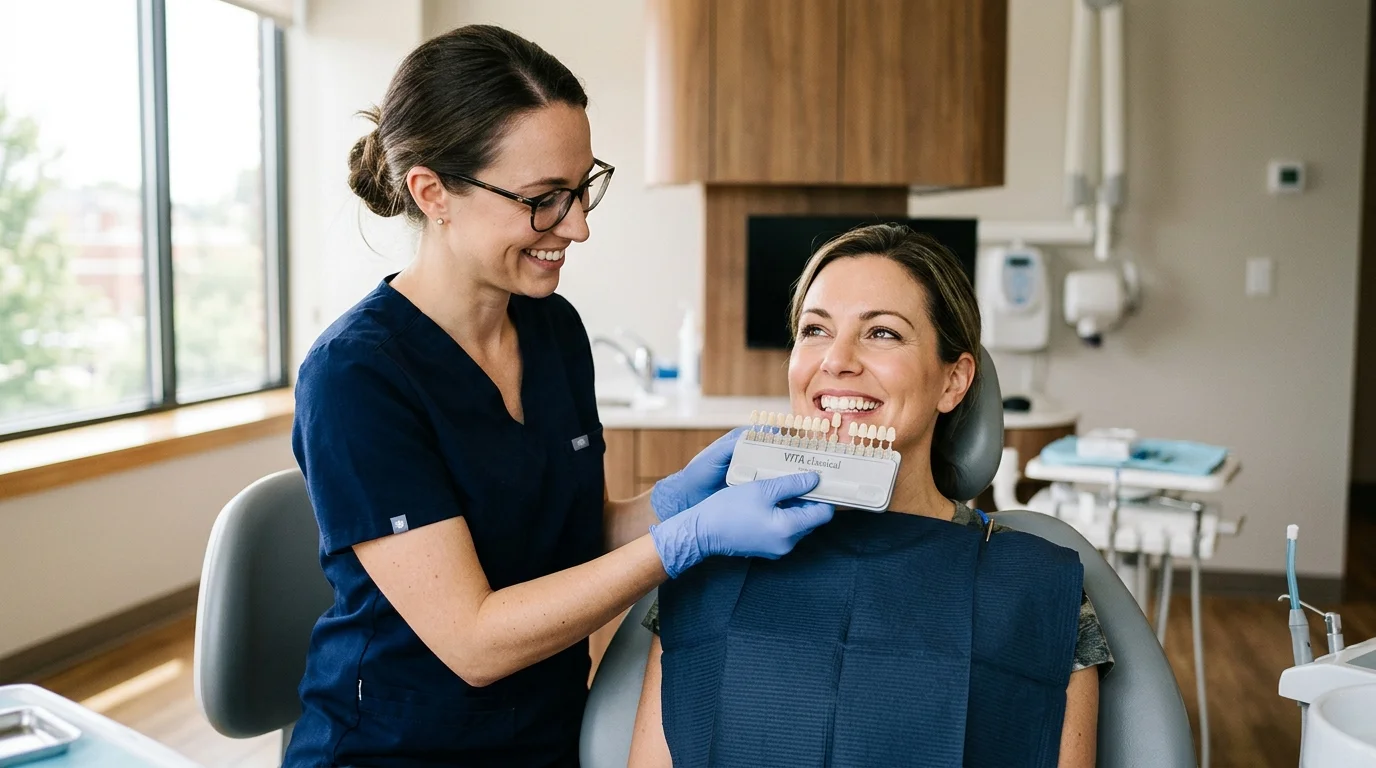
Dentist at Olive Tree Dental holding a porcelain veneer shade guide beside a patient in London, Ontario

Bonding or veneers?

Most people arrive with a single question (“can you fix this tooth?”) and no idea which treatment answers it. This is the fastest way to find out.

Bonding is probably your answer if:

Veneers are probably your answer if:

If you read both lists and you are still not sure, that is completely normal, and it is exactly what the consultation is for. We will look, take photos, and tell you which one we would actually recommend. Sometimes that answer is “neither, whiten first and see how you feel.”

The difference, in plain terms

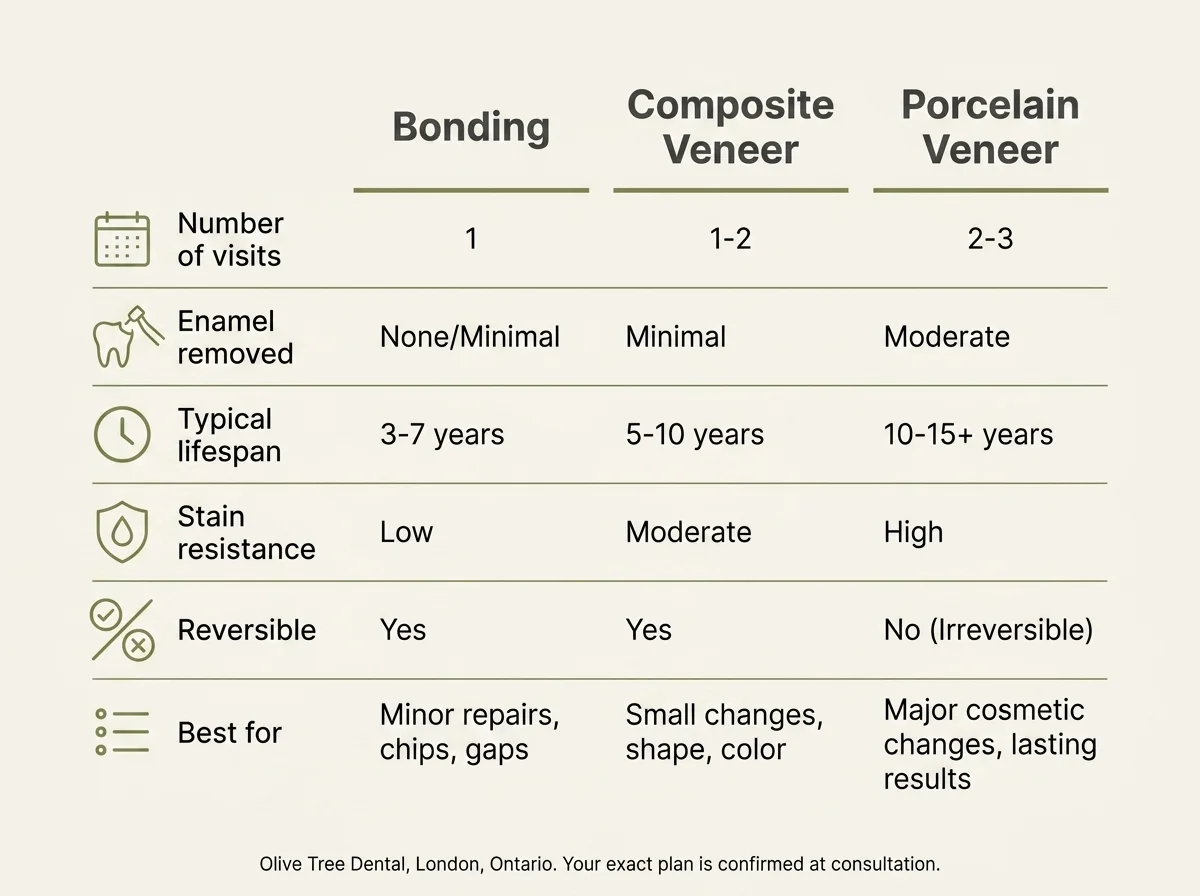
Porcelain veneers are made in a dental lab from your impressions or scan and bonded on at a later visit. They are the stronger, more stain-resistant option, and they hold their colour. To fit them, we remove a thin layer of enamel, usually well under a millimetre. That part is not reversible, which is why we take it seriously and why we will not do it on the same day you first ask about it.
Composite veneers are built up chairside from the same family of material as bonding, but covering more of the tooth. Faster, cheaper, more repairable, and easier to undo. They do not last as long and they will pick up colour from coffee and red wine over the years.
Comparison chart showing dental bonding, composite veneers and porcelain veneers by visits, lifespan, staining and reversibility
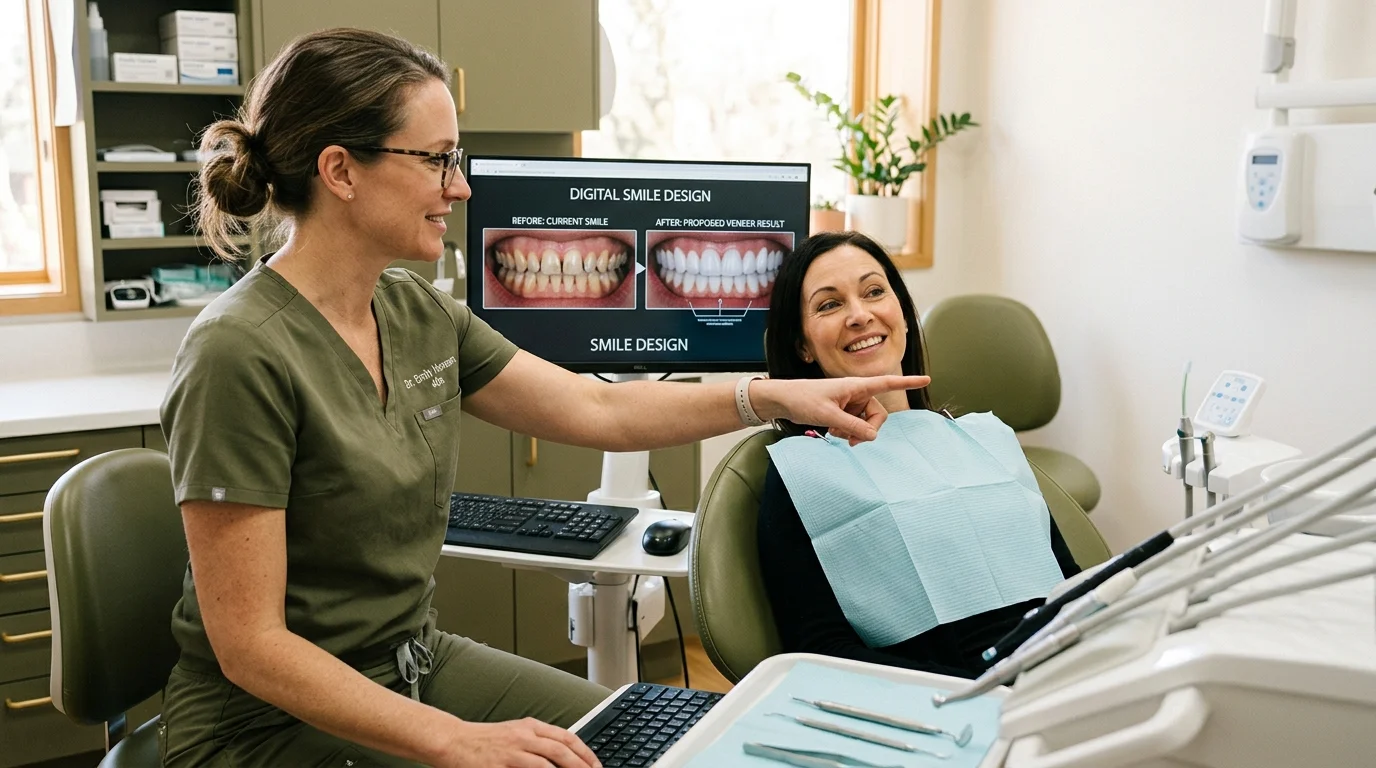
Digital smile design preview on a monitor showing a patient's planned veneer result at Olive Tree Dental in London, Ontario

We show you the result before we touch a tooth

This is the part most people do not know is possible, and it is the thing we would most want you to take away from this page.
Before any enamel comes off, we can show you what the finished smile will look like. We take photographs and a digital scan, and we design the shape and proportions of the new teeth against your actual face, not against a generic template. You look at it. You tell us the teeth are too long, or too white, or too square, and we change it before anything is permanent.
If you want to go further, we can do a composite trial on one or two teeth first. That is real material, on your real teeth, that you walk around with. You see it in your own bathroom mirror and in your own photos for a while. If you love it, we proceed to porcelain. If you do not, we take it off and nothing has been lost except an appointment.
We would rather have that conversation before the enamel is gone than after. So would you.

What veneers and bonding cost in Ontario

We do not publish our fees, and we want to be straight with you about why. Two people can walk in with what looks like the same chipped tooth and need completely different work. One needs a single bonding appointment. The other has a crack running under the gum, an old root canal that has discoloured the tooth from the inside, and a bite that is grinding the front teeth flat. Quoting a number before we have looked would either mislead you or scare you off, and both are worse than saying “come in and we will tell you exactly.”
What we can give you is the honest market context, so you know roughly what territory you are in before you book.
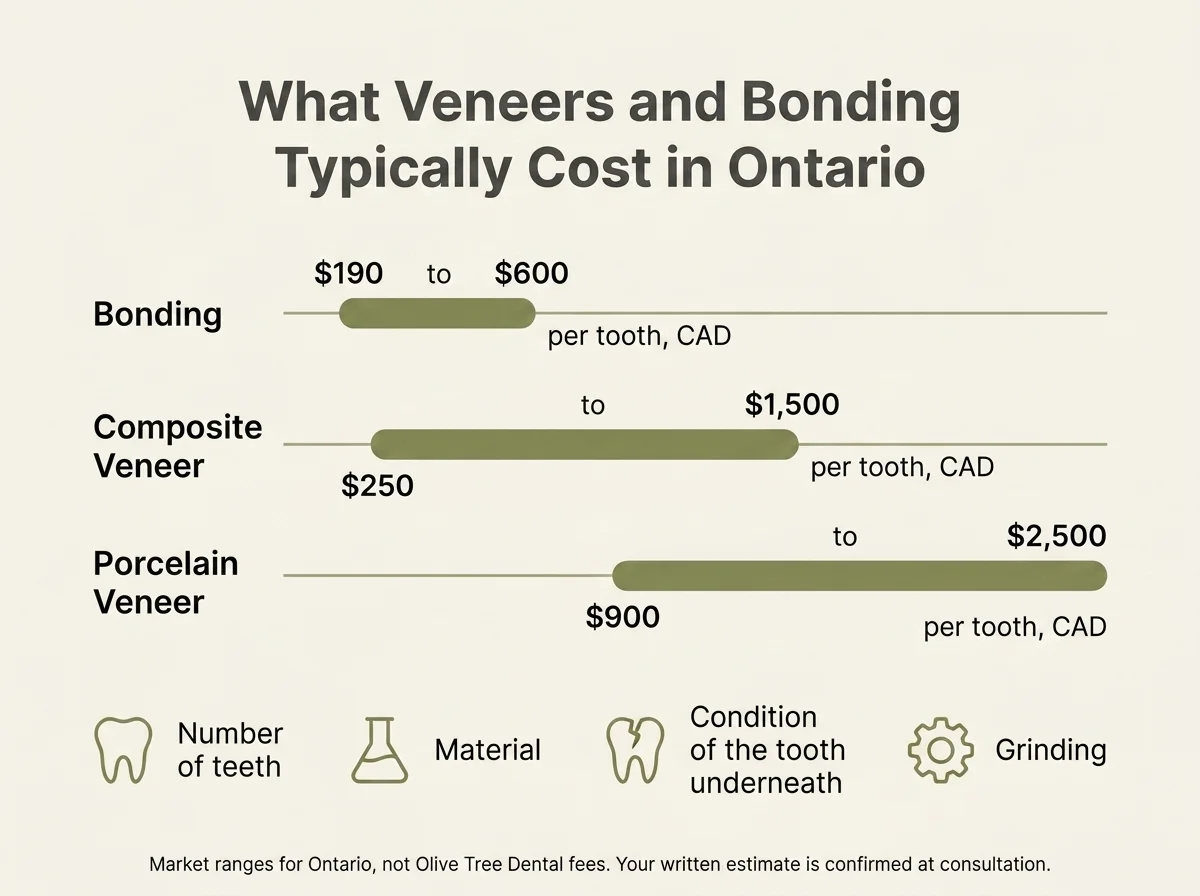
For reference, the average porcelain veneer in Ontario sits around $705 per tooth, and most people treat the six to eight teeth that actually show when they smile rather than the whole mouth. Eight porcelain veneers in Ontario commonly works out somewhere around $5,600 in total. The ODA Suggested Fee Guide, which most Ontario practices work from, lists a direct composite veneer in the region of $540.
What moves your number up or down:
On insurance: cosmetic veneers are almost never covered. Most Canadian plans exclude them by category, and the Canadian Dental Care Plan does not cover them either. There is one real exception worth asking about. If the work is restoring a tooth damaged by trauma or decay rather than purely improving appearance, part of it may be claimable as restorative. We will tell you honestly which side of that line your case falls on, and we will help you submit a predetermination to your insurer so you get their answer in writing before you commit.
And you will get it in writing: After your consultation we give you a written treatment plan with the fee for your specific case. Not a number over the phone, not a verbal estimate that drifts. In writing, before you decide anything.
Infographic showing typical Ontario cost ranges for dental bonding, composite veneers and porcelain veneers per tooth

What actually happens, appointment by appointment

If you are having bonding: One visit. We match the shade to your surrounding teeth, lightly roughen the surface so the resin grips, apply the composite in layers, shape it, cure it with a light, and polish it. Anaesthetic is often not needed at all for a simple chip. You eat normally the same day. Some people feel mild temperature sensitivity for a few days afterward, which settles.
If you are having porcelain veneers: Visit one, the consultation. We examine your teeth and gums properly first, because veneers bonded onto an unhealthy foundation are a waste of your money. We take photographs and a digital scan, talk through shape and shade, and show you the design. You leave with a written plan and a fee.
Visit two, the preparation. We remove a thin layer of enamel, take the final scan, and fit temporary veneers so you are never walking around without front teeth. You wear those while the lab makes yours. This is usually a few weeks.
Visit three, the fit. We try the veneers in before we bond anything permanently, and you look at them in the mirror in daylight. If a shade or an edge is not right, that is the moment to say so. Once you are happy, we bond them, check your bite, and polish.
You will be numb for the preparation visit, so you should not feel pain. Afterward, some sensitivity to cold for a few days is common while the temporaries are on. If you get pain that is throbbing, worsening, or comes with swelling, that is not normal, and we want you to call us rather than wait it out.

Looking after them

Veneers and bonding are not maintenance-free, and anyone who tells you otherwise is selling.
Brush twice a day and floss, exactly as you would with natural teeth. The tooth underneath a veneer can still decay at the margin, and the gum around it can still get inflamed. Keep your cleaning appointments.
If you grind your teeth, tell us, and wear the nightguard. Grinding shortens the life of any veneer faster than anything else we see. It is the single most common reason a beautiful set of veneers fails early.
Bonding and composite will pick up stain from coffee, tea, red wine, and smoking. Porcelain resists it much better, but the natural teeth around it do not, so if you whiten, do it before the veneers go on. We cannot lighten a veneer afterward to match.
Do not open packaging with your front teeth. We say it every time and we mean it every time.
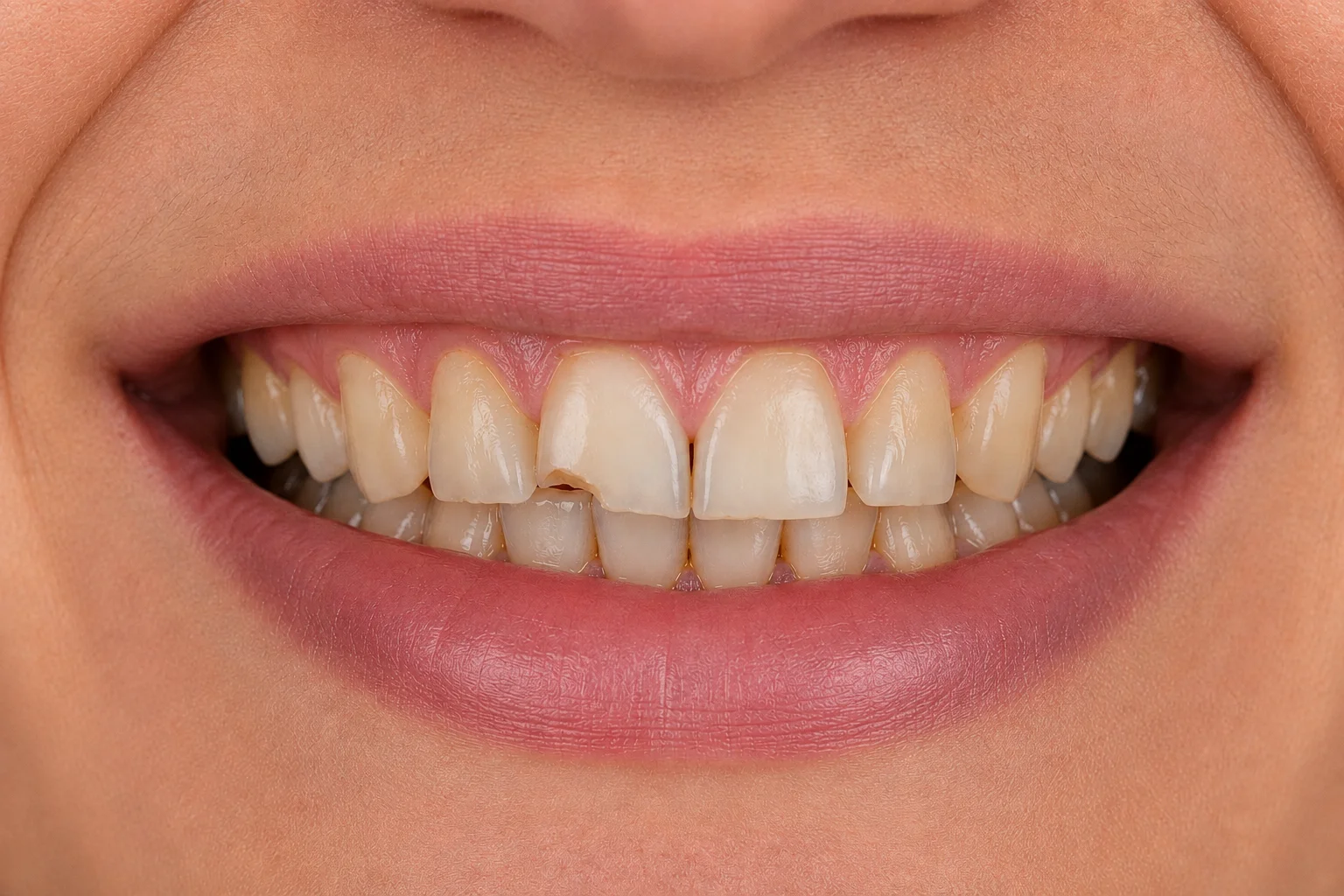
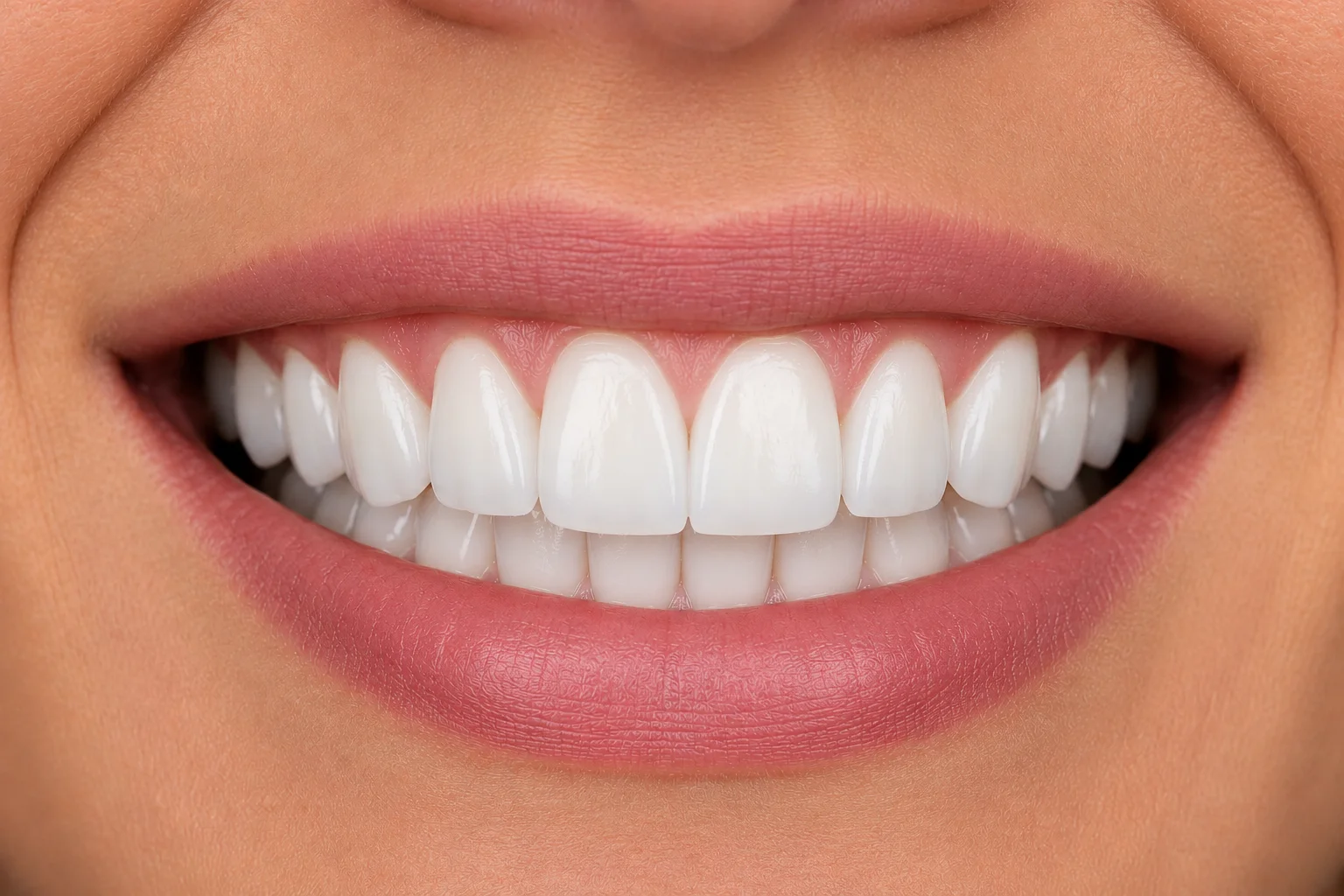
Before and after porcelain veneers on upper front teeth, cosmetic dentistry patient at Olive Tree Dental London Ontario

Why patients choose Olive Tree Dental for cosmetic work

We are on Richmond Street in downtown London, at the corner of Oxford, so we are easy to reach from Old North, Woodfield, Blackfriars, and the Western campus.
Five consecutive Top Choice Awards as London’s Top Choice Dental Clinic, 2022 through 2026. More than 518 Google reviews at 4.9 stars. Twenty-five years of the same practice looking after the same families in this city.
But the reason to pick us for veneers specifically is narrower than any of that. It is that we will show you the result before we remove any enamel, we will tell you when bonding would do the job instead of veneers, and we will put the fee in writing before you commit to anything.

Frequently Asked Questions

In Ontario, porcelain veneers generally run between $900 and $2,500 per tooth, and composite veneers between $250 and $1,500. Bonding is considerably less, usually $190 to $600 per tooth. Those are market ranges rather than our fees, because the right number depends on how many teeth you are treating and what condition they are in underneath. We give you a written estimate for your specific case after your consultation.
You will be frozen for the preparation appointment, so you should not feel pain during it. Afterward, mild sensitivity to cold for a few days is common while you are wearing the temporaries, and it usually settles on its own. Bonding often does not need freezing at all. If you get pain that is worsening, throbbing, or comes with swelling, call us. That is not part of the normal healing and we want to see you.
Porcelain veneers commonly last 10 to 15 years, and often longer with good hygiene and if you are not grinding. Composite veneers usually give you 4 to 8 years. Bonding tends to last 3 to 10 years depending on where it is and how hard that tooth works. None of these are permanent, and any dentist who tells you they are is not being straight with you. They will eventually need replacing.
Almost certainly not, if the reason is cosmetic. Most Canadian dental plans exclude cosmetic procedures by category, and the Canadian Dental Care Plan does not cover veneers. The exception is when the work restores a tooth damaged by trauma or decay rather than simply improving its appearance, in which case part of it may qualify as restorative. We will tell you which side of that line your case sits on, and we can submit a predetermination so you have your insurer’s answer in writing first.
Whitening will not change the shade of a veneer or of bonding. It only lightens natural tooth. That is why we always whiten first, let the shade settle, and then match the veneers to the result. If you are thinking about both, do them in that order. Have a look at our [teeth whitening in London, Ontario] page.
No. Most people treat only the teeth that show when they smile, which is usually the six to eight upper front teeth. Some people come in for a single tooth. We would rather treat the tooth that bothers you than sell you a full arch you did not ask for.

Book a consultation

Bring the photo you hate. Seriously. The one where you are doing the closed-mouth smile. It tells us more about what is actually bothering you than ten minutes of describing it will.
We will look, tell you honestly whether bonding or veneers is the right call (or whether you need neither), show you the result before anything is permanent, and give you the fee in writing.