
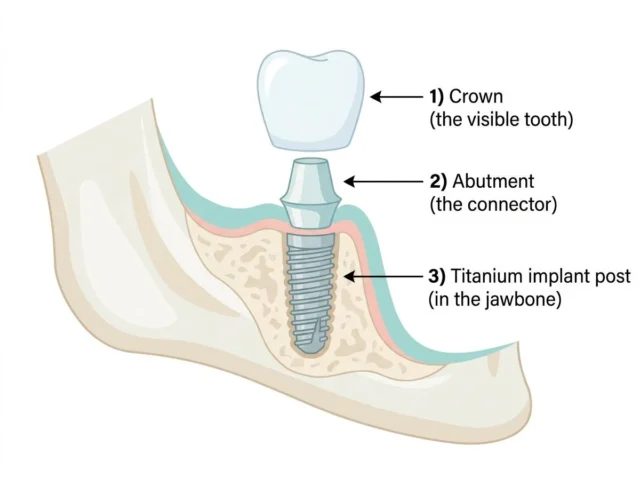
With good day-to-day care and regular checkups, implants can last many years, and for a lot of people, decades. The implant post itself is built to be a long-term fixture. The crown on top can wear over time and may eventually need replacing, much like any restoration. Brushing, flossing, and a checkup every six months go a long way.
Often yes. If the jawbone has thinned, a bone graft can rebuild enough support for an implant. We assess this with a CT scan at your consultation and tell you honestly whether a graft is needed first.
Coverage varies a lot between plans. Some cover part of the implant or the crown, but many don’t cover implants in full. Bring your plan details, and we’ll help you understand what applies and what you’d pay out of pocket.After getting dental implants, patients may take a while to get used to them. Initially, they may experience slight soreness, pain, or discomfort in the affected areas. However, these are temporary side effects that generally subside independently or with antibiotics.
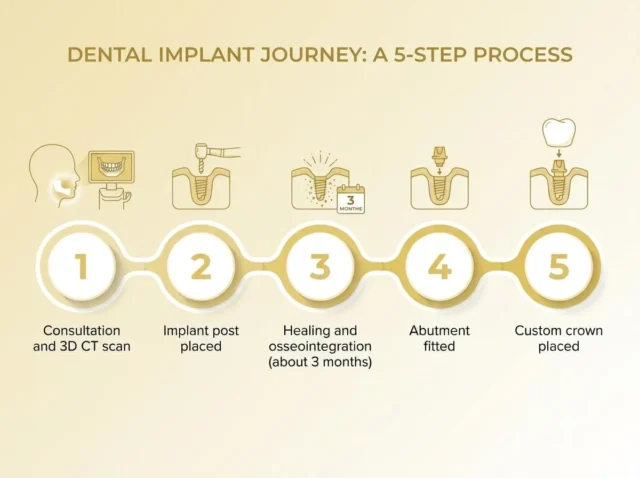
From placement to final crown is usually around three to four months, most of which is healing time while the bone fuses to the implant. The appointments themselves are short. We’ll give you a personal timeline at your consultation.
That’s common, and it’s okay. The area is fully numbed, and we can discuss sedation if you’d feel better with it. We’ll explain each step before we do it so there are no surprises.