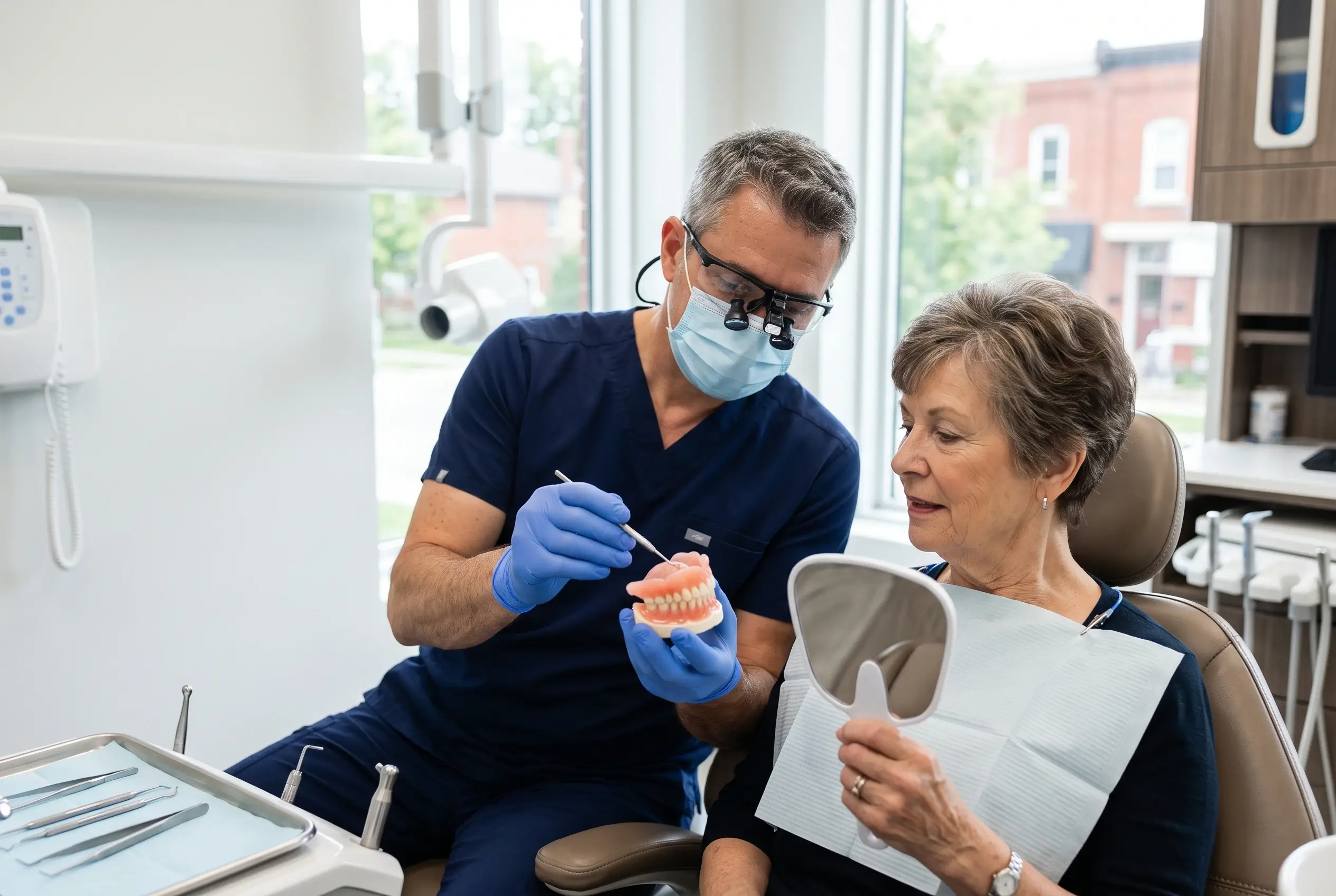
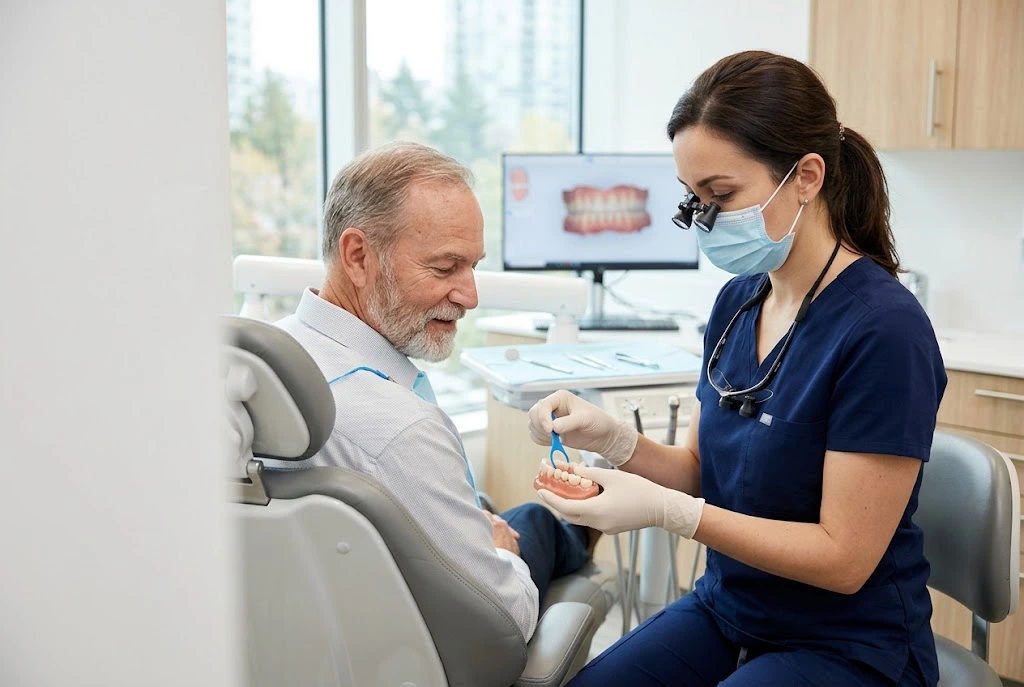
A dental bridge is a fixed restoration that is attached to supporting teeth or implants. A denture is removable and can replace several teeth or an entire arch.
A dental bridge is fixed, meaning you cannot remove it yourself. However, it is not considered permanent for life. Its longevity depends on factors such as oral hygiene, bite, supporting teeth and regular dental care.
Yes. Complete dentures are designed to replace all teeth in an upper or lower arch when natural teeth are no longer present or cannot be saved.
Dentures can restore much of your chewing function, but eating with dentures can feel different from eating with natural teeth. Most patients need an adjustment period and may initially find some foods more difficult to chew.
Have them examined. Loose dentures may need an adjustment, reline or replacement. In some cases, implant-supported dentures may be worth discussing.
Your dentist can advise you based on your individual circumstances. In many cases, dentures are removed at night to allow the oral tissues to rest.
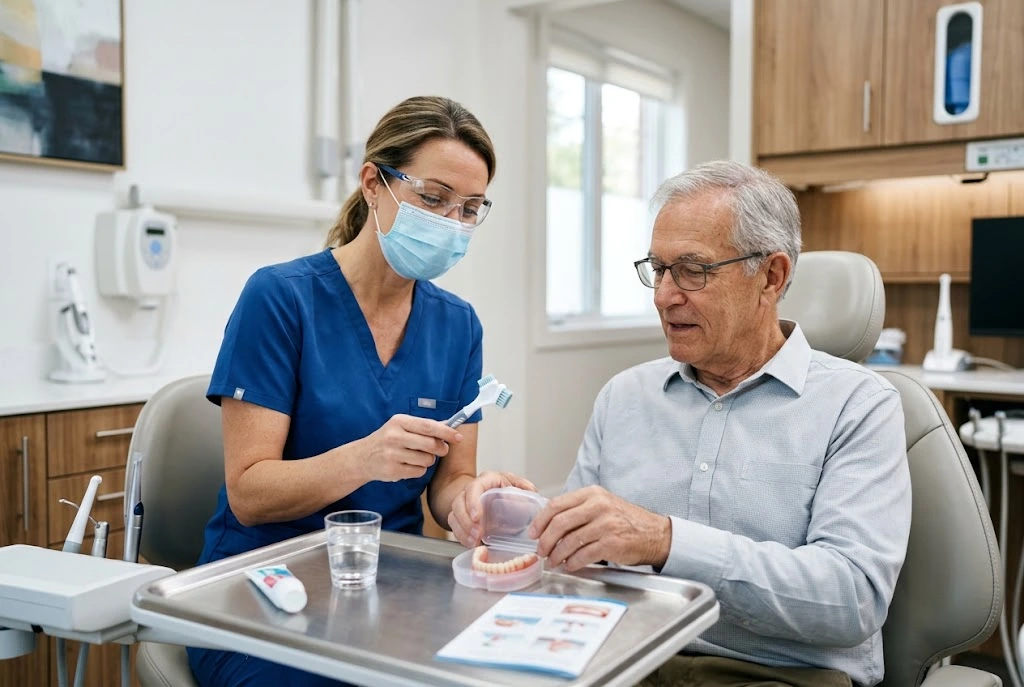
Clean your dentures regularly with a denture-safe cleaning product and a suitable brush. You should also clean your gums, tongue and any remaining natural teeth.
The CDCP covers eligible removable partial dentures, although some partial denture services require preauthorization and frequency limitations apply. Coverage is subject to the plan’s current rules.
No. Under the current CDCP Dental Benefits Guide, fixed prosthodontics, including bridges and bridge-related procedures, are excluded.
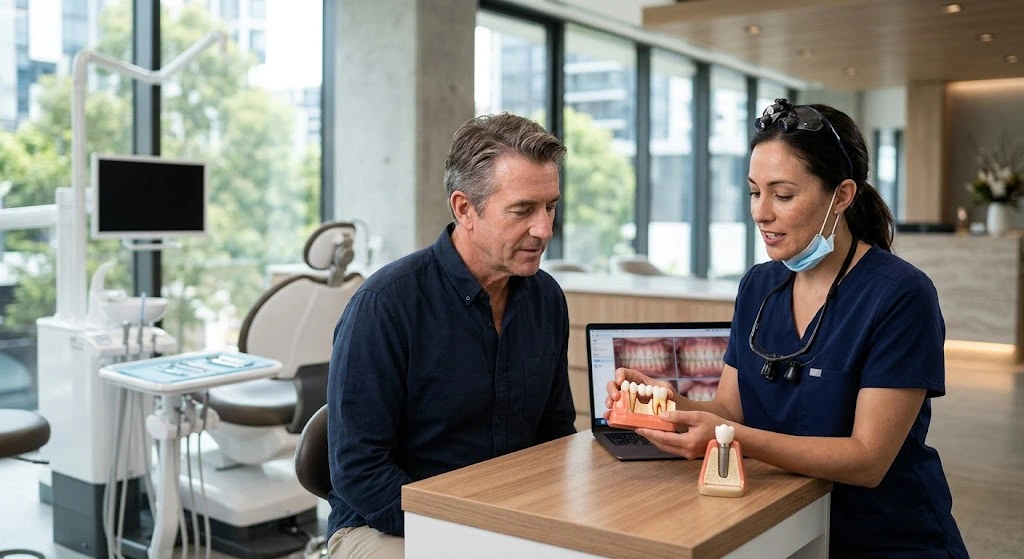
It depends on your oral health and the condition of the teeth around the missing tooth. A bridge relies on supporting teeth, while an implant is placed into the jawbone and can support a replacement tooth without using neighbouring teeth. Your dentist can assess which options are appropriate for you.