
Emergency Dentist in London, Ontario

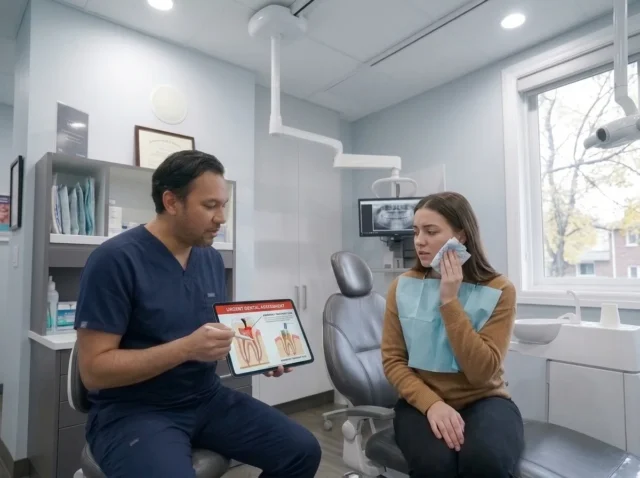
A severe toothache, broken tooth, swelling or dental injury can make it difficult to wait for a regular appointment. At Olive Tree Dental, we provide prompt emergency care for patients who need immediate attention.
If you’re looking for an emergency dentist in London Ontario, our team can assess your symptoms and help determine the right next step.

What Is a Dental Emergency?

A dental emergency is a problem that needs prompt assessment because of significant pain, infection, bleeding, trauma or the risk of further damage to your teeth or surrounding tissues.
If you’re searching for an emergency dentist in London Ontario, you may be dealing with one of these common situations:
If you’re unsure whether your problem requires emergency care, contact our office and explain your symptoms. We’ll help you determine how quickly you should be seen.

Think it is a dental emergency? Here is what to do right now

Most dental emergencies are easier to fix the sooner you are seen. While you call us and make your way in, here is what helps in the first little while.

Knocked-out tooth

Pick it up by the crown, not the root. If it is dirty, rinse it gently with water (do not scrub). If you can, slip it back into the socket and bite softly on clean gauze. If you cannot, keep it in a small container of milk or your own saliva and bring it with you. Time matters with a knocked-out adult tooth, so call us straight away.

Broken or chipped tooth

Save any pieces and bring them. Rinse your mouth with warm water. If there is swelling, a cold compress on the outside of the cheek helps. Avoid chewing on that side until we see you.

Bad toothache

Rinse with warm water and floss gently once to clear anything stuck between the teeth. Over-the-counter pain relief like ibuprofen can take the edge off. A toothache that keeps you up at night usually means something needs attention, so book in rather than riding it out.

Lost filling or crown

Keep the crown if you still have it. Avoid hard or sticky food on that side. The exposed tooth can be sensitive, so call and we will get it sorted before it gets worse.

Swelling or a dental abscess

Facial swelling, a fever, or a bad taste from a gum pocket can point to an infection that should be seen quickly. Do not try to drain it yourself. Call us, and if it is after hours and the swelling is spreading fast or affecting your breathing or swallowing, treat that as a medical emergency and go to the nearest emergency room.

Broken braces or poking wire

If a wire is poking your cheek, cover the end with orthodontic wax or a small piece of cotton. Do not cut the wire. Call and we will adjust it.

Emergency Dental Problems We Treat

Severe Toothache

A toothache that is intense, persistent or getting worse can be a sign of decay, an infection, a cracked tooth or damage to the nerve inside the tooth.
Pain medication may provide temporary relief, but it does not address the cause. An emergency dental examination can help identify the source of the pain and determine whether you need a filling, root canal treatment, extraction or another form of care.

Broken, Cracked or Chipped Tooth

A tooth can break because of an accident, sports injury, biting something hard or untreated decay.
If possible, keep any broken pieces and bring them with you. Rinse your mouth gently with water and use a cold compress against the outside of your cheek if there is swelling. Depending on the damage, treatment may include a filling, bonding, crown or root canal treatment.

Knocked-Out Tooth

A knocked-out permanent tooth needs immediate attention. Handle the tooth by the crown rather than the root. If it is dirty, gently rinse it with water without scrubbing it. If possible, carefully place it back into its socket. If that isn’t possible, keep it moist in cold milk and contact a dentist immediately.
Time matters when a permanent tooth has been knocked out. Prompt treatment can improve the chance of saving the tooth. A knocked-out baby tooth should not be placed back into the socket. Contact a dentist for advice.

Dental Abscess and Swelling

An abscess is an infection that can cause pain, swelling, tenderness, a bad taste or drainage around the tooth or gums. Dental infections should not be ignored simply because the pain temporarily improves. Treatment is aimed at addressing the source of the infection, which may involve drainage, root canal treatment or extraction depending on the condition of the tooth.
If swelling is severe or spreading, particularly if it affects your ability to breathe or swallow, seek emergency medical attention.

Lost Filling

A lost filling can expose the inside of the tooth and cause sensitivity or pain.
Keep the area clean and avoid chewing on that side until you can be assessed. A dentist can determine whether the filling can be replaced or whether the tooth needs additional treatment.

Lost or Broken Crown

A lost crown can leave the underlying tooth vulnerable to sensitivity and further damage.
If your crown has come off, keep it and bring it with you. Avoid using household glue to put it back in place. Your dentist can assess the crown and tooth and determine whether it can be re-cemented or needs to be replaced.

Wisdom Tooth Pain

Pain around a wisdom tooth can be caused by inflammation, infection, decay or an impacted tooth. If you also have swelling, difficulty opening your mouth, fever, a bad taste or worsening pain, prompt dental assessment is important.
Olive Tree Dental can assess the cause of your wisdom tooth problem and discuss appropriate treatment.

Dental Injuries and Trauma

An accident involving the mouth can damage teeth, gums, lips or the jaw. Even when a tooth does not appear badly damaged, an injury can affect the tooth’s nerve or supporting structures. Prompt assessment can identify problems that may not be visible immediately.
If you have suffered significant facial trauma or suspect a broken jaw, hospital emergency care may be necessary.

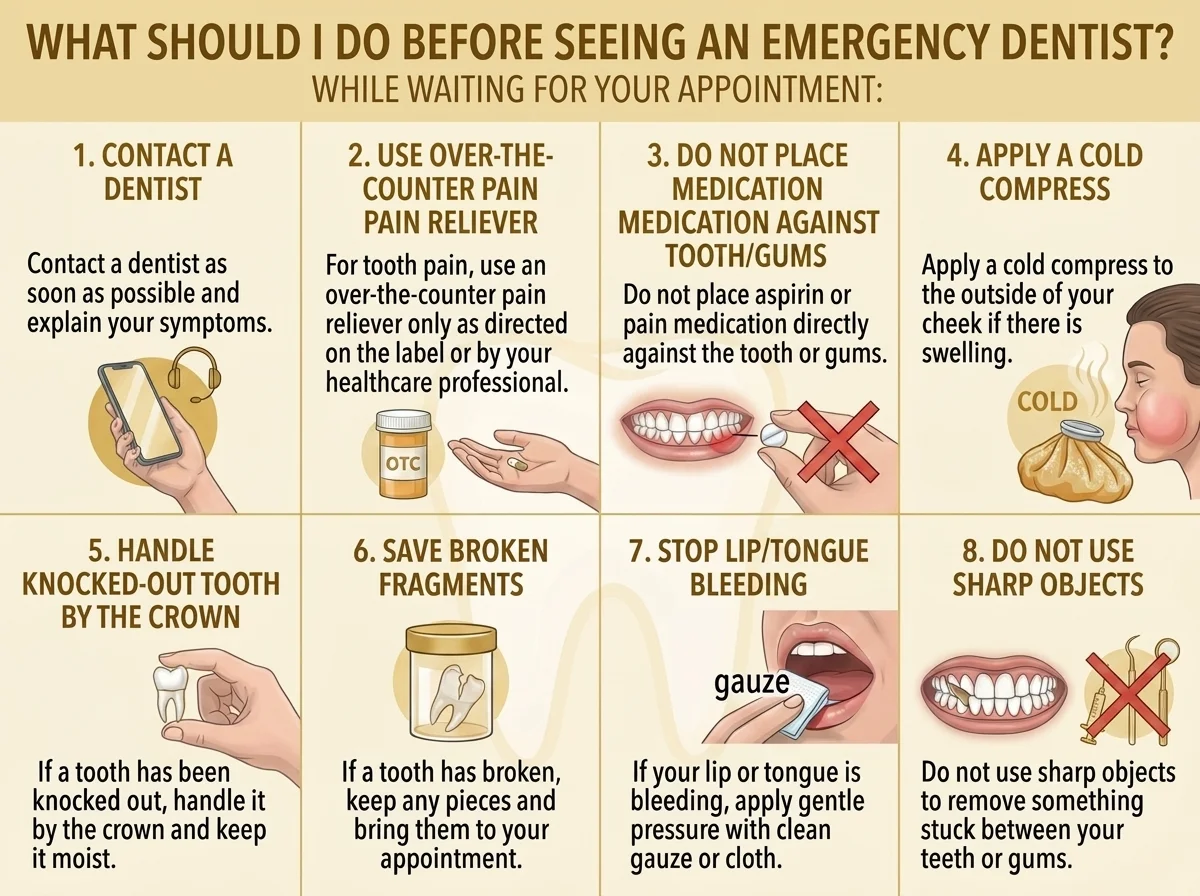
What Should I Do Before Seeing an Emergency Dentist?

While waiting for your appointment:
Dentures and implants

When Should I Go to the Hospital?

Most dental problems can be assessed and treated by a dentist. However, some situations require emergency medical care.
Go to a hospital emergency department if you have:
For toothaches, abscesses and many other dental problems, a London Ontario emergency dentist is generally better equipped to diagnose and treat the underlying dental cause.

Emergency Dental Treatments in London, Ontario

The appropriate treatment depends on what is causing your emergency. After examining your tooth and taking X-rays when necessary, our dental team can recommend the most suitable option.
Emergency treatment may include:
The goal is not simply to make the pain disappear temporarily. We want to identify what is causing the problem and provide treatment that protects your oral health.

What Happens During an Emergency Dental Appointment?

When you arrive for an emergency appointment, we’ll first ask about your symptoms, when the problem started and whether you have experienced an injury. Your dentist will examine the affected area and may take an X-ray to determine what is happening below the surface.
Once the cause has been identified, we’ll explain your treatment options and discuss the recommended next step with you. Depending on your situation, treatment may be completed during the emergency visit or may require a follow-up appointment.
We understand that emergency visits can be stressful, especially when you’re already dealing with pain. Our team will explain what we’re doing and answer your questions before treatment begins.
Top choice dental clinic of 2026
Top choice dental clinic of 2025
Top choice dental clinic 2024
Top choice dental clinic of 2023
Top choice dental clinic 2022

Why Choose Olive Tree Dental for Emergency Care?

When you need urgent dental treatment, you want a clinic that can assess the problem, explain your options and provide appropriate care.
At Olive Tree Dental, we offer:
Olive Tree Dental has served the London, Ontario community for many years. Our goal is to provide practical, effective dental care while helping patients understand their treatment options.

Emergency Dental Care for Children

Children can experience dental emergencies from falls, sports injuries, accidents or damaged teeth. If your child has injured a tooth, contact a dentist promptly for guidance. A knocked-out permanent tooth requires urgent attention. A knocked-out baby tooth should not be placed back into the socket because doing so can damage the developing permanent tooth.
We provide family dental care and can help assess dental injuries and urgent problems affecting children.

Dental Emergencies and Dental Anxiety

Dental pain can be stressful, and the thought of receiving treatment during an emergency can make that stress worse.
At Olive Tree Dental, we take the time to explain what we find and what treatment may be required. If you’re nervous about dental treatment, let our team know when you call so we can take your concerns into account when arranging your visit.

Does Dental Insurance Cover Emergency Dental Care?

Coverage depends on your individual dental insurance plan and the treatment required. Some emergency examinations, X-rays and treatments may be covered, while other services may have limitations or require pre-approval.
If you have dental insurance, bring your insurance information with you. Our team can help you understand the information available to you, but your insurance provider determines your actual coverage.
If you are covered by the Canadian Dental Care Plan (CDCP), eligibility and coverage depend on the current CDCP requirements and the specific dental services provided. Coverage should be confirmed before treatment.

Frequently Asked Questions

Olive Tree Dental offers same-day emergency appointments when availability permits. Call our office as soon as possible and tell us what is happening so we can determine how urgently you need to be seen.
Handle a permanent tooth by the crown, not the root. If possible, gently place it back into the socket. If you cannot, keep it moist in cold milk and contact a dentist immediately. Do not scrub the tooth or allow it to dry out.
A severe or persistent toothache should be assessed promptly. Tooth pain can be caused by decay, infection, a damaged nerve, a crack or another dental problem that requires treatment.
Most toothaches should be assessed by a dentist because dental treatment is needed to address the underlying cause. However, go to a hospital emergency department if you have difficulty breathing or swallowing, uncontrolled bleeding, severe spreading swelling, significant facial trauma or another serious medical concern.
It is not a good idea to ignore an abscess. Dental infections can worsen and may cause increasing pain and swelling. Contact a dentist promptly for assessment and treatment.
Keep the area clean, avoid chewing on the affected side and arrange a dental appointment. A dentist can determine whether the filling needs to be replaced or whether the tooth requires additional treatment.
Many broken teeth can be repaired or restored, depending on the extent of the damage. Treatment may involve bonding, a filling, a crown or root canal treatment. The sooner the tooth is assessed, the more options may be available.
Contact Olive Tree Dental and let us know that you need urgent dental care. Our team can explain appointment availability and the next step based on your situation.
The cost depends on the examination, X-rays and treatment required. Dental fees can vary depending on the procedure and individual circumstances. We can discuss the recommended treatment and associated costs with you before proceeding.

Need an Emergency Dentist in London, Ontario?

Don’t wait for severe dental pain, swelling or a damaged tooth to become a bigger problem.
Contact Olive Tree Dental when you need an emergency dentist in London Ontario. Call 519-672-0931 or request an emergency dental appointment today.