
If you’ve lost a single or several teeth, it’s likely that you’re seeking a solution to bridge the gap and return to eating, smiling and speaking comfortably.
Two solutions that are commonly used are dental bridges as well as dentures. Both can be used to replace missing teeth, however they operate differently and can meet different requirements. The decision between them can be difficult, particularly if you’re unfamiliar with the options for dental treatment.
This article will go over what dental bridges and dentures
are and how they differ, and what could make the other better for you. In the end you’ll have a clear idea of which one is best for your lifestyle.
What Is a Dental Bridge?
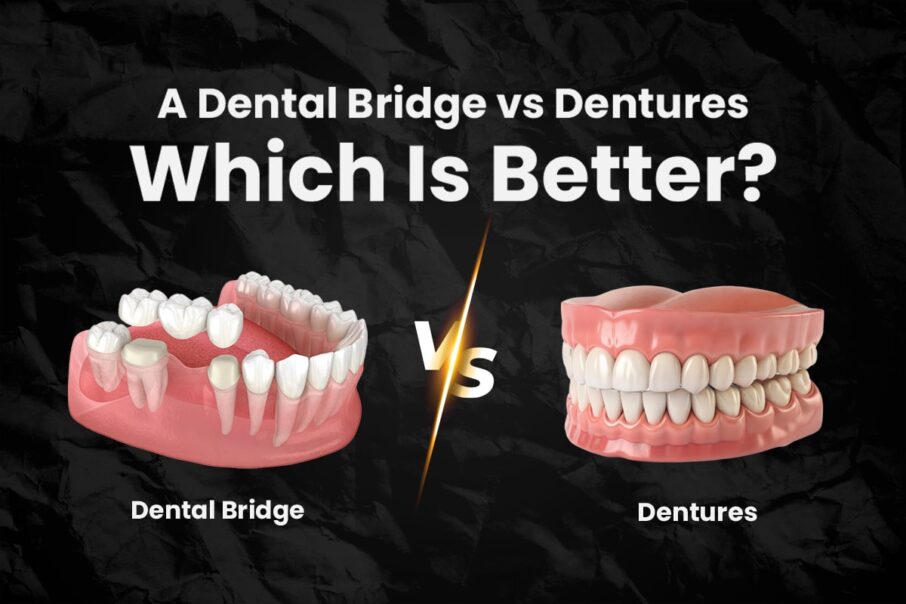
The dental bridge is a permanent device which fills in the gap created by a few or one missing teeth. It’s referred to as a bridge since it “bridges” the space between healthy teeth.
The bridge is composed of an artificial tooth (called pontic) that is held in place by crowns that are attached to teeth that are on opposite sides of that gap. The teeth that are adjacent, also known as abutment teeth, have to be strong enough to help support the bridge.
Bridges are custom made to look similar to your real teeth using materials such as ceramic, porcelain or metal. They are cemented into place to ensure that they won’t fall out which makes them feel as if they’re an element within your mouth.
Dental professionals often suggest the use of a dental bridge when you’re missing only two teeth and you have healthy teeth nearby to secure it. It’s a great option to restore your bite and keep your smile healthy.


What Are Dentures?
Dentures provide a removable solution for teeth that are missing and the gum tissue surrounding them.
They come in two kinds of dentures: complete dentures (for those who have lost all your teeth in your lower or upper jaw) and partial dentures (for those who are missing a few teeth, but are able to have some naturally-occurring ones).
They’re typically made of acrylic, and sometimes include metal to give them extra strength and are made to fit the mouth of your.
Contrary to a dental bridge, dentures are able to be removed to clean or sleep. They’re an ideal choice for those who have lost a lot of teeth or a whole row.
Dentures can help you chew, talk, and smile comfortably, and the latest models are quite natural. However, they can require some adjustment especially while eating or speaking.
How Do Dental Bridges and Dentures Compare?
Both dental bridge and dentures can replace missing teeth however, they differ in the way they are made, used, and maintained. Let’s take a look at the main factors to find out how they compare.
Appearance:
The Dental bridge is designed to blend in with your natural teeth due to it being placed in place and designed to fit their shape and color. It’s a great way to achieve an aesthetically pleasing appearance, particularly when the gap is located on one of the sides.
Dentures are also realistic in appearance today due to the improved materials, however they might not feel as natural due to the fact that they are removable. Partially dentures could have clasps made of metal which can be visible, but modern designs conceal these clasps well.
Functionality:
The dental bridge is like your teeth because it’s glued to your own and won’t move. It is possible to chew almost all foods quickly, but things that are extremely sticky or hard may require caution.
Dentures are great to chew, however they could slip if they’re not properly fitted, which could make eating a little more difficult at first.
Complete dentures require more time to adjust to because they cover a larger area of your mouth. They can also impact speech or taste until you get used to them.
Installation Process:
A dental bridge generally requires two visits to the dentist. Dentists shape anchor teeth, taking impressions and creating an interim bridge. After that, the custom bridge is fixed in. In the case of dentures this process may be a couple of times.
Dentists create molds from your mouth. He then adjusts the fit and then makes dentures. dental prosthetics.
Partially dentures have to be able to fit around the teeth that are already present, and may require additional adjustments. Both procedures are easy, however, they depend on the condition of your mouth.
Cost:
The cost of the price of a dental bridge varies, typically between $1500 and $5,000, based on the material as well as the amount of teeth to be replaced.
Dentures could cost from $1,000 to $3,000 for partials, or $2,000 to $8,000 for complete sets. Prices vary based on the location and the dentist you choose.
Insurance could cover a part of the cost, but dentures are cheaper when replacing a lot of teeth, while bridges are cheaper only for a couple of teeth.
Durability:
The dental bridge is able to last for between 10 and 15 or even more years, with proper care. It’s durable, but it depends heavily on the overall health and condition of your anchor teeth.
Dental implants last for 5 to 10 years before they need replacement or adjustments as your mouth’s shape alters over time.
Both require regular dental checks to keep them in good shape however bridges are more long-lasting.
Maintenance:
The dental bridge is treated the same way as natural teeth. Brush two times a day and floss with care beneath the bridge. Also, see the dentist on a regular basis.
Dentures require more effort. They are removed every day then wash them with a cleaning solution, then brush them regularly to ensure they are clean.
It is also important to wash your mouth as well as all remaining teeth. Inadvertently cleaning dentures can cause the formation of stains and bad breath.
Pros and Cons of a Dental Bridge
Pros:
- The Dental bridge will match your teeth, creating a seamless smile.
- The device is fixed in place, which means you can eat and chat without fear.
- It gets familiar with it quickly since it isn't moving.
- If you take care of it, the product can last for more than 10 years.
Cons:
- The teeth that anchor the bridge must be strong or else the bridge won't function.
- It's recommended to replace one or two teeth, but not for a full row.
- Shaping anchor teeth could cause them to weaken over time.
- It is higher than part dentures with small gaps.
Pros and Cons of Dentures
Pros:
- Dentures are suitable for some or all missing teeth.
- Cheaper for a Larger Complete dentures are less expensive than bridges that have multiple teeth.
- It doesn't require surgical procedures that are invasive such as implants.
- If damaged dentures are easier to replace.
Cons:
- It takes a while to get used to speaking and eating might be uncomfortable at first.
- Dentures can shift if they are not properly fitted, leading to discomfort.
- You must get rid of and clean them each day.
- They wear out much faster than the tooth-colored bridge.
Which Is Better for You?
Deciding among a dental bridge or dentures is dependent on your particular situation. If you’re missing only one or two of your teeth, and are healthy with your nearby teeth then the dental bridge could be the best option.
It’s fixed, natural looking and feels just like the teeth you have. It’s ideal for children or those looking for an easy-to-maintain option.
However, if your anchor teeth aren’t sturdy or you’re missing a lot of teeth, the bridge will not be as effective.
Dentures are more suitable in the event that you’ve lost some or all of your teeth. Particular dentures are ideal if you have a few natural teeth. Full dentures are ideal for those who have no remaining teeth. They are more affordable to replace multiple teeth, and don’t require strong anchor teeth. However, they need more attention and adjustment and may not be suitable for all people.
Take a look at your budget, the number of teeth you’re missing, as well as your level of comfort with maintaining.
A dental bridge is the ideal permanent and easy solution for minor gaps. Dental bridges are recommended for more severe teeth or if you prefer something that is removable. The dentist can examine your mouth and recommend the best treatment depending on your overall health and lifestyle.
Other Options to Consider
In addition to a dental bridge as well as dentures, alternative options are dental implants. Implants are made of metal and that are placed inside your jawbone, with an artificial tooth placed over them. Implants last for a long time and feel natural however they’re more costly and require surgery.
They can cost between $3,000 and $5,000 per tooth, meaning they’re not suitable for all. If you’re thinking about long-term options, talk to your dentist about implant options to determine whether they’re a good fit for your budget and requirements.
How to Care for Your Dental Bridge or Dentures
Careful maintenance ensures that both options are working properly. If you have dental bridges, for a dentist’s bridge, clean it twice per day using a soft toothbrush. You can also utilize floss or a specially designed threader to clean it.
Regular dental visits
catch problems early. If you wear dentures remove them every night and soak them in a denture cleaner, then scrub them with a gentle brush. Cleanse your mouth as well as any remaining teeth as well.
Avoid eating hard food or drinks to avoid harm to your teeth. If you experience discomfort, looseness or sores, consult your dentist as soon as possible.
Conclusion
The decision between the options of a dental bridge or dentures is based on your personal desires, budget, preferences, and priorities.
The dental bridge provides a permanent natural-looking, natural-looking option for missing teeth, ideal if you need something that is durable and easy to keep.
Dentures are an option for the replacement of a few and all your teeth particularly when cost is an issue or you don’t have sturdy anchor teeth. Both are able to improve your smile and boost confidence However, they will require different levels of care and adjustments.
Discuss with your dentist to determine which one is best for your lifestyle. If you make the right choice, you’ll be eating, talking and smiling, without worry.