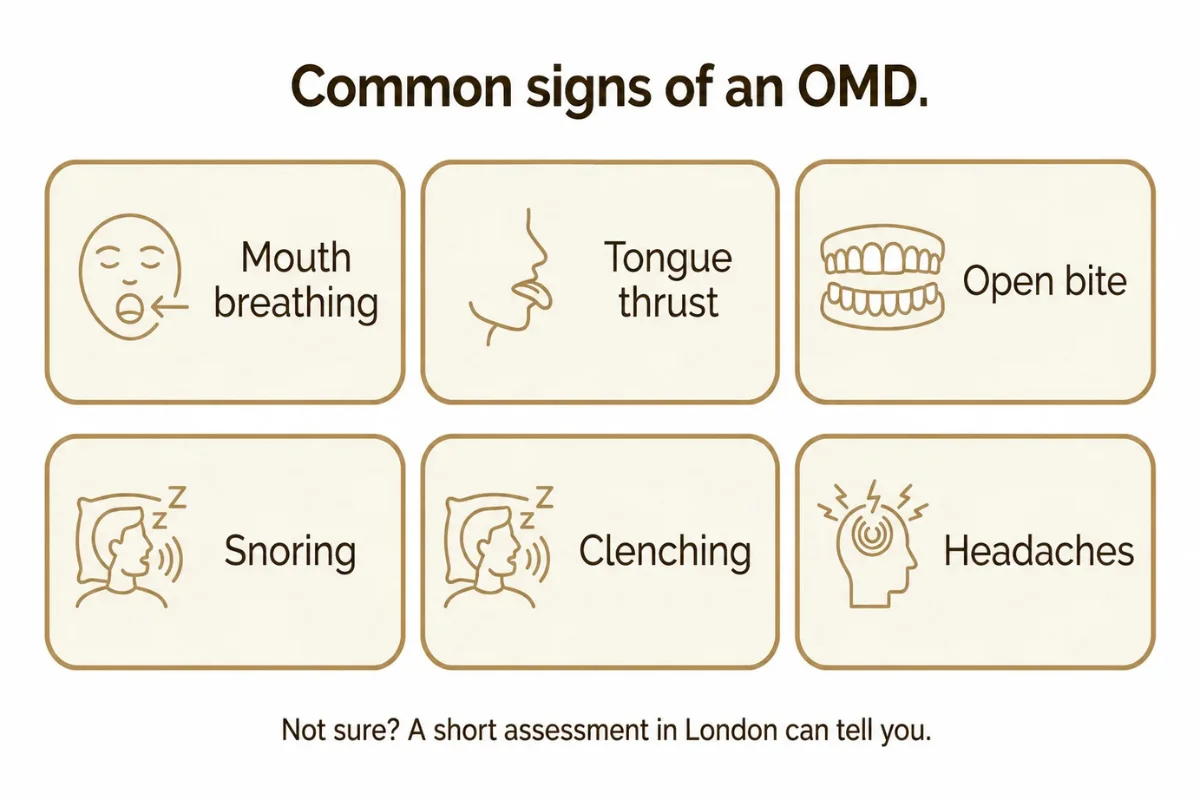
Common signs include mouth breathing, lips that remain open at rest, tongue thrust, snoring, restless sleep, clenching, or jaw tension. You do not need to have every symptom. An assessment can determine whether an orofacial myofunctional disorder (OMD) is present and whether therapy may help.
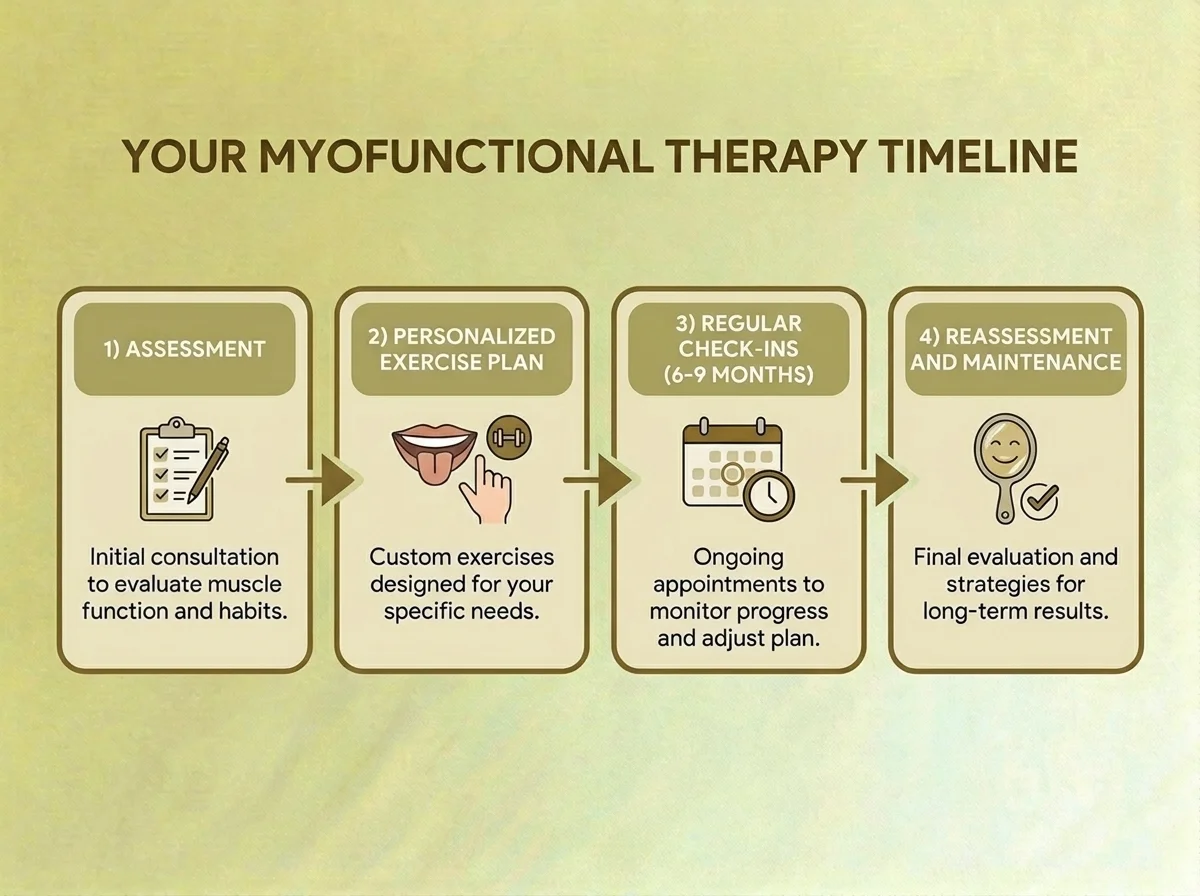
Most myofunctional therapy programmes run for about 6 to 9 months, often with 10 to 18 sessions and short daily exercises at home. The number of appointments depends on your needs and progress.
It may help reduce snoring and symptoms of mild to moderate obstructive sleep apnea by improving tongue and upper-airway muscle function. It is not a cure or replacement for medical treatment. Suspected sleep apnea should be properly diagnosed first.
Yes. Myofunctional therapy for adults can address oral muscle and breathing patterns at any age. It may also support orthodontic treatment when appropriate.
Coverage depends on your individual extended health plan and how the service is classified. Check with your insurance provider before starting treatment to confirm whether you have coverage.
No. The exercises are gentle and non-invasive. You may need to practise them regularly at home to achieve and maintain progress.
It may improve tongue and oral muscle coordination when swallowing difficulties are related to an orofacial myofunctional disorder. An assessment is needed to determine whether therapy is appropriate.
It may help improve tongue, lip, and resting patterns that can affect orthodontic results. However, it does not replace retainers or other orthodontic aftercare.
Treatment varies by patient. At Olive Tree Dental, programmes commonly run for 6 to 9 months, with the exact timeline determined after your assessment.